Office 2021 is the personal and small business ‘perpetual licence’, non-subscription version of Microsoft Office. For Windows and Mac.
Office LTSC (Long Term Servicing Channel) is the volume licence ‘perpetual licence’, non-subscription version of Microsoft Office for organizations, companies and governments. Also for Windows and Mac.
The features in Office 2021 and Office LTSC are very similar, if not the same.

Thumbs Up👍emoji in Word, Excel, PowerPoint and Outlook
Insert Thumbs Up or Like👍symbol into Microsoft Word, Excel, PowerPoint or Outlook. Both in Office for Windows and Office for Mac. Thumbs Up / Like👍emoji is typically used when you ‘like’ something or have approval/agreement. It’s commonly used as a quick response to a comment on Facebook, Twitter and it’s coming to Office Comments too. […]

Copy VBA Macros between Microsoft Word documents
VBA code or Macros can be copied between Microsoft Word documents and templates quite easily if you know where to look. We’ve seen people laboriously copying code between VBA editor windows, not realising there’s an easier way. It’s not entirely necessary but usually the two macro-enabled documents/templates are opened first. Open Macro Organizer Go to View […]

Find search secrets in Microsoft Word
Search for text and a lot more within a document using the Find side-pane feature in Microsoft Word. There are secrets making it more powerful than first appears. You might think it’s as simple as typing in a word and Office will find it but, as usual, there’s a lot more power hidden away. We’re […]
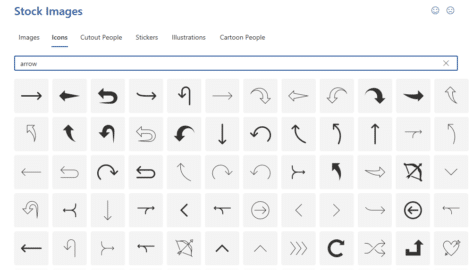
Find all Arrow or Hand pointing symbols and more
There are different arrow or hand pointing symbols available in Word, PowerPoint or other Office apps. Left, Right, Up, Down, North, South, East, West. Here’s an easy searchable list of all Unicode pointing symbols plus the arrow and point icons in modern Office See also Check ☑︎, tick ✔️ and cross ❌ symbols galore Point […]
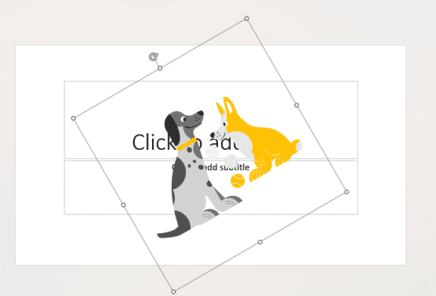
Fast rotate and resizing in PowerPoint
With a few PowerPoint keystrokes you can move, rotate or resize an object in any direction in tiny amounts to get it where and how you want it. Positioning objects in PowerPoint applies to PowerPoint for Microsoft 365, PowerPoint 2021/2019 (Windows and Mac), PowerPoint 2016 and PowerPoint Online. Change size, and rotation with the arrow […]
Quicker and finer positioning or ‘nudge’ in PowerPoint
Placing graphics on a PowerPoint slide is simple but getting them positioned “just right” needs a ‘nudge’. Smart Guides and Gridlines Mostly positioning images and other objects is easily done with the Smart Guides (look for the faint red or gray lines as you move about an object) or use View | Gridlines to overlay […]

Make sense of an Outlook email header
A nice little tool that will make sense of any email header you receive in Outlook. An email header tells you a lot about the sender and the route the message took to reach you. Emails don’t go directly from your computer to the receiver, they pass through at least two other servers and probably […]
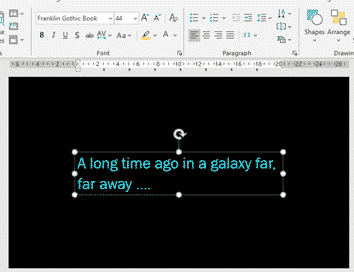
Star Wars movie opening and end credits in PowerPoint
Open and close your presentation with a look from a galaxy far, far away or at least a Star Wars movie near you. Here’s the fonts, colors, background and other details to emulate the opening and closing credits. See Star Wars in Office Star Wars in the Office dictionary Opening Credits A long time ago in […]
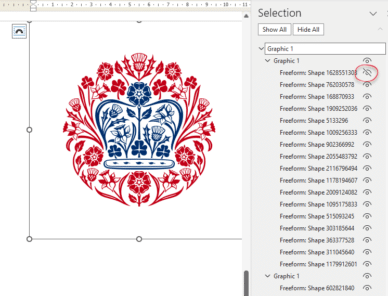
All 20 Coronation emblems and how to use them in Microsoft Office
All 20 (yes, twenty!) emblems for the Coronation of King Charles III, the exact colours required and how to use them in Microsoft Office like Word documents and PowerPoint slides. Also how to get an SVG/icon version of the emblem, ideal for modern Office apps and show just the parts you want (e.g. no text, […]
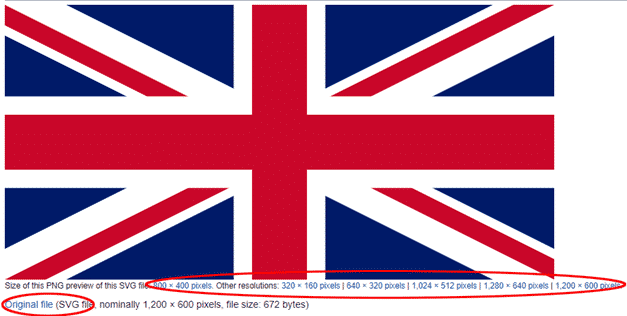
Insert the British ‘Union Jack’ flag into Word, Excel or PowerPoint
Add the British National flag “Union Jack” into Office documents, Word, Excel or PowerPoint, then use some Office picture tools to enhance the image. The same help applies for any other national flag, just look for a different source. Get the British Flag Image There are many, many copies of the British flag available. We’ve […]
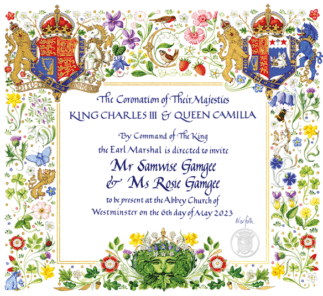
Make your own invitation to the Coronation!
Has your invitation to the Coronation of King Charles and Queen Camilla got lost in the mail? Never fear, you can make your own ‘replacement’ <g>. Or more likely use the ornate graphics for some other purpose, not always so serious. Here’s an ‘invitation’ made in PowerPoint with a name added (including compulsory Monty Python […]
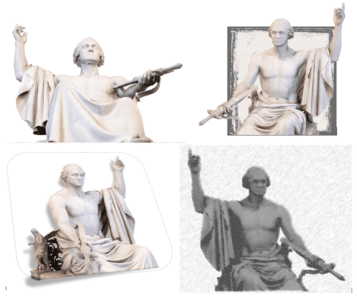
Discover the secret powers of a 3D model
3D models have a secret. They let you choose the exact look you want, turn it into a 2D ‘normal’ image that you can do a lot more with. Here’s a 3D model from the Smithsonian collection, a full length but frankly plain view of a famous statue. With a little Microsoft Office trickery, you […]

Six ways to Subscript or Superscript in Word and Office
There are SIX ways to add text that appears smaller and slightly below (subscript) or above (superscript) in Word, PowerPoint and other Office apps. This kind of text is commonly used in mathematics (e.g. X2) and other technical fields (e.g. H2O), but can also be used for something as simple as a date or other […]

Six Word tricks to reduce space between lines
Reducing the line spacing or vertical gap between lines in Word paragraphs can be done in six different ways depending on your needs. Adjusting line spacing to put lines very close isn’t usually necessary for regular text. It becomes useful when trying some design tricks for headings, for example the title in our Millennium poster. […]

Typography 101 – font terms explained
Font vs typeface, ascender, desender, X-height, finial … there’s a nice one-page guide to all the Typography terminology. Become a typography nerd in under 10 minutes by Andrew Coyle Has a good visual summary of all the major words used talking about type – the broad categories of fonts (Serif, San-serif etc), how letters combine […]

Goldman Sachs font for a new look in Excel, Word and Office
The (in)famous Goldman Sachs bank has released their own font which anyone can use in their Word, Excel or Powerpoint documents. It’s called Goldman Sans and is available for anyone to download and use. The font is especially useful in Excel workbooks. The company describes the sans-serif typeface as “approachable without being whimsical”. Goldman Sans, […]